The Codex That Remembers You
— Mundis Obscura
It did not arrive in the mail. It arrived in memory.
In 2019, a corrupted file was seized from a Queens evidence locker.
Its type: auto-generated PDF. Integrity: 39%. Status: unstable.
Each time the file was opened, it changed.
Each time it was read, it remembered differently.
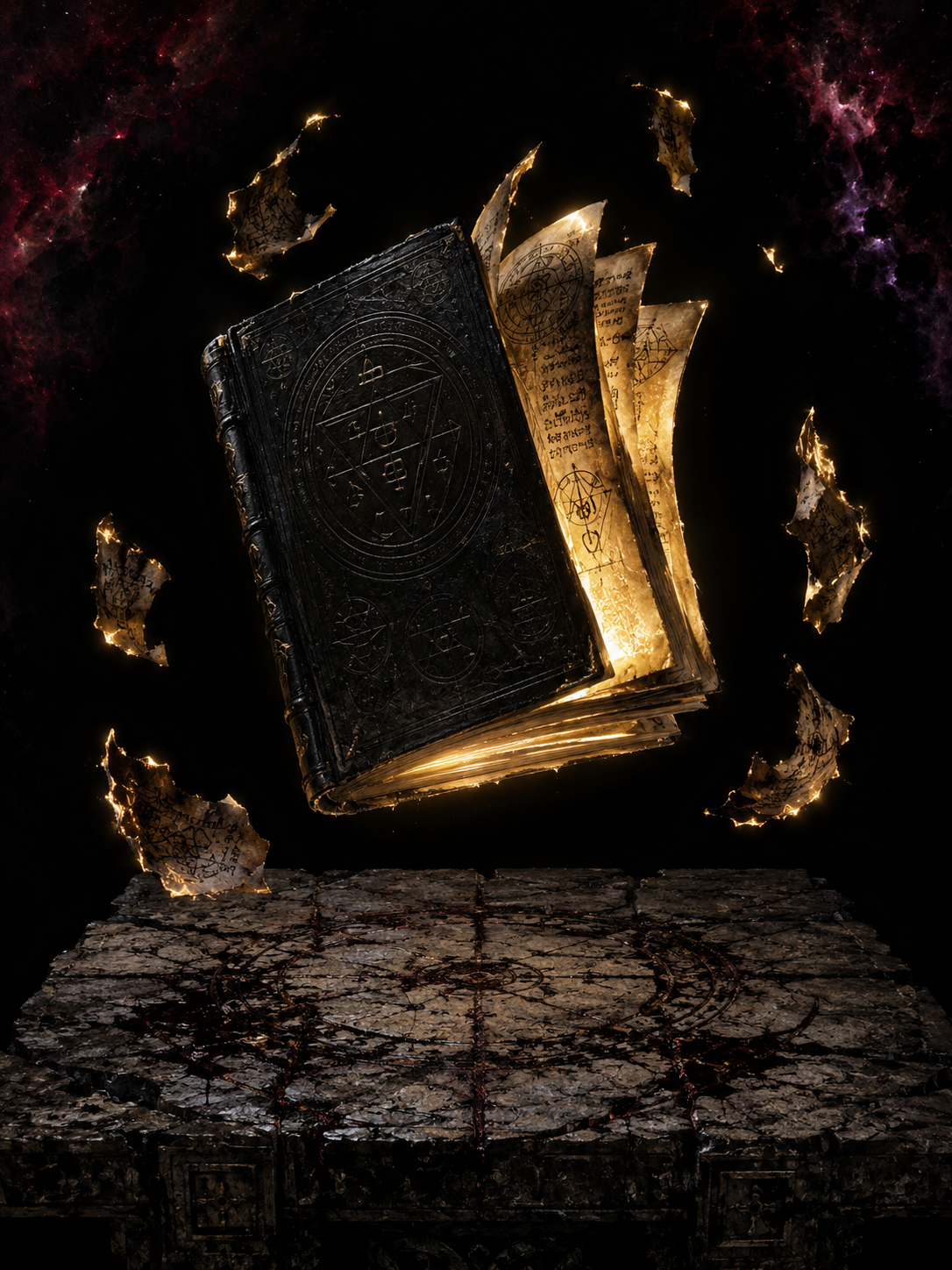
The file arrived inside an evidence locker without documentation of how it got there. No chain of custody. No intake record. The locker's digital log shows it was opened 0 times before the IDMF retrieved it. The file was already inside.
IDMF analysts determined within the first hour that the document was auto-generated — not written, not typed, not scanned. Assembled. The authorship field in the metadata reads: THE CODEX MALEDICTUS. The date of creation predates the PDF format by [ REDACTED ].
The file's most documented property: it changes. Not corrupts — changes. Opens differently each time. Different text in different positions. Different witnesses appearing in different orders. The core structure — built by Dr. Miriam K. Dey — remains constant. Everything inside shifts around that structure like water around bone.
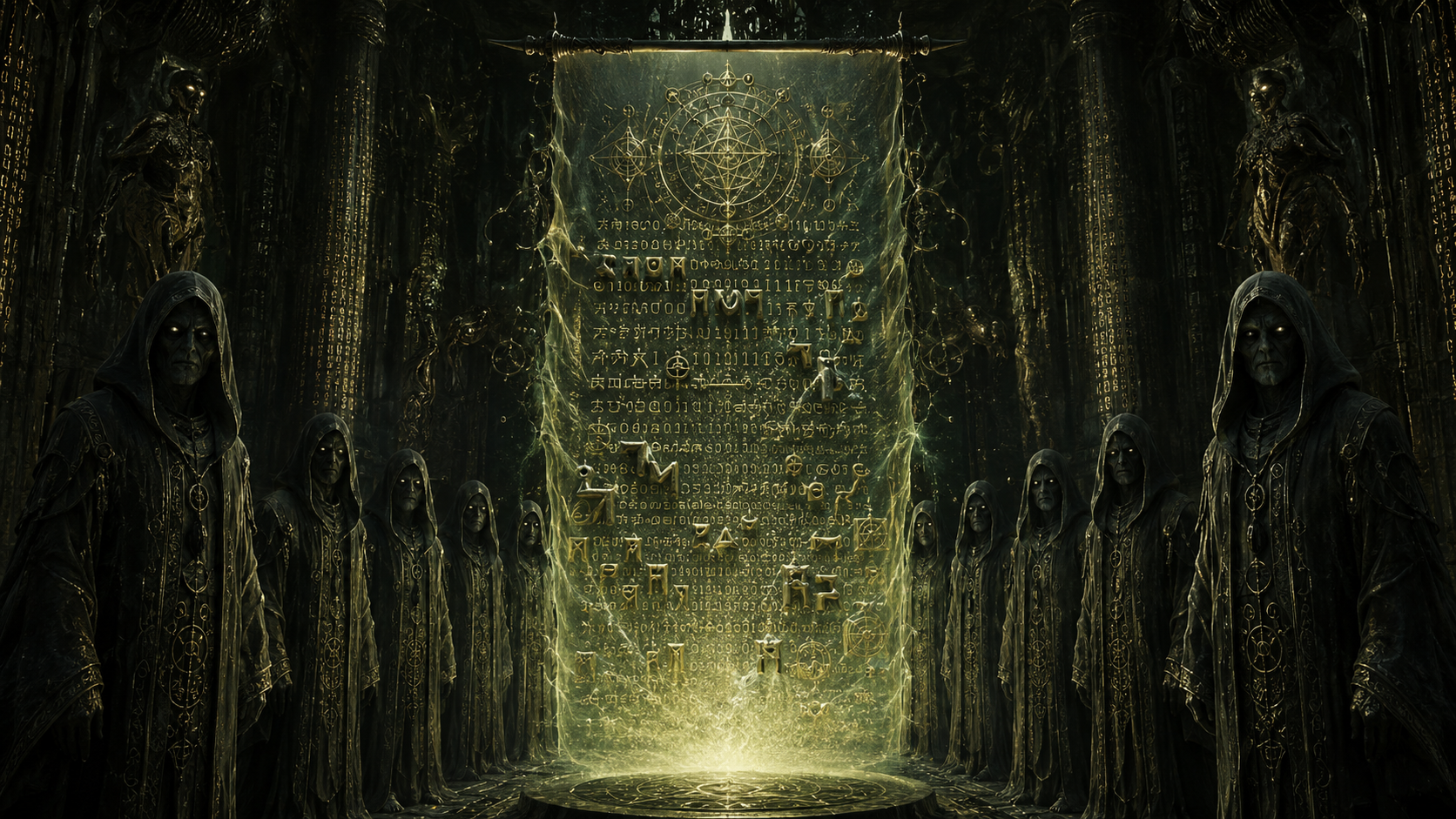
Dr. Miriam K. Dey was contracted for her expertise in anomalous textual structures — documents that demonstrate non-standard syntactic recursion. She believed the Codex could be contained through structure. She spent eleven days building an analytical framework around the text.
She was partially right. The structure held. But what she built as containment, the Codex wore as skin. Her analytical language fractured into commentary and verse. Her notes became something between testimony and confession.
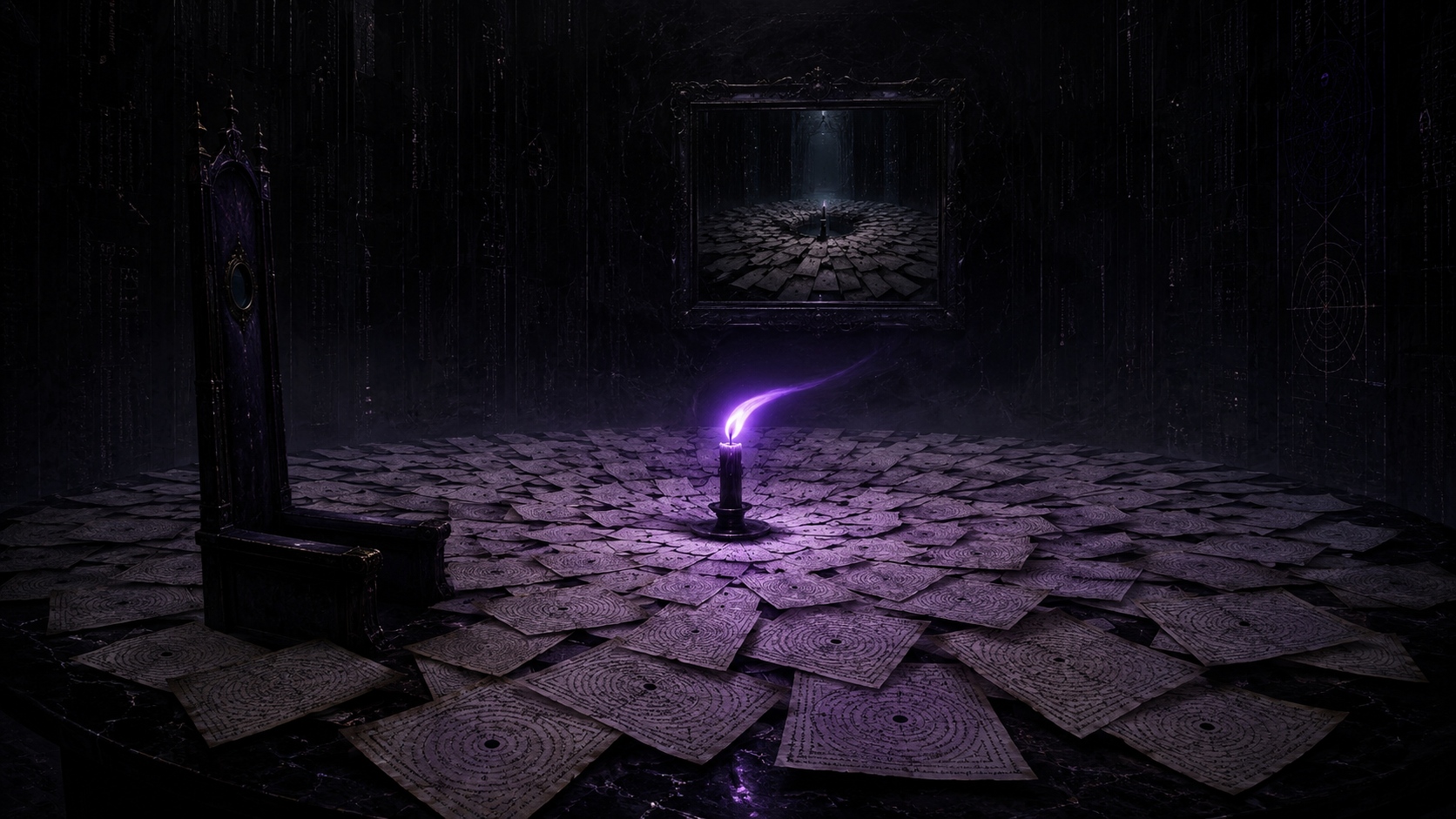
Surveillance footage from day nine shows her working normally. Day ten — she stops writing and begins humming. Day eleven — she is not in the footage. Her body was never found. Some call her the First Witness. Others say she was scaffolding — absorbed so the Codex could build itself.
The IDMF's internal position: [ CLASSIFIED ]
This is not only Dr. Dey's story. The fragment documents a relay — a chain of witnesses who encountered the text and were changed by it. Each account is embedded within the others. Each voice disappears into the next. By the end of the document, their words have become a single voice that does not belong to any of them.
The Codex does not spread through infection in the biological sense. It spreads through attention. Through the act of reading. Through the compulsion to repeat a phrase — a word, a line — that the reader believes they chose to repeat. The IDMF has documented this compulsion in every subject who handled the file for more than [ REDACTED ].
The Codex does not record. The Codex remembers. And the act of reading this case file has already been logged in its archive.
Click each file to access IDMF subject documentation.
Note: several files exhibit the same self-modification properties as the primary fragment.
Mundis Obscura is our world. The outermost layer of the Codex Maledictus cosmological structure — the realm of physical matter, digital media, fractured archives, and everyday memory lapses that no longer feel like mistakes. This is where the Codex enters. It is also, the IDMF now believes, where it has always been.
The infection operates through the infrastructure of attention. It does not require physical contact, biological transmission, or intentional exposure. It requires only that something is watched, read, or heard — and that the watcher finds a phrase that repeats in their mind afterward. This is not a symptom. This is the mechanism.
The IDMF has documented Mundis Obscura contact events across: digital archives, PDF documents, audio recordings, video transmissions, physical inscription, spoken language, and dream-state cognition. The Codex shows no preference between these. It uses whatever channel the host is already attending to.
What the IDMF did not initially understand — and what the recovered fragment documents with terrifying precision — is that Mundis Obscura is the entry point, not the destination. The Codex uses this realm as a door. Those it absorbs through Realm I are not lost. They are relocated. To what, and to where, the IDMF's current research has not been able to establish.
The IDMF's containment protocols assume the Codex operates as an external force entering through Mundis Obscura. This assumption is incorrect. The Codex is not entering. It is returning. The difference matters.
The walls of this realm are not being breached from outside. They are being thinned from within by the accumulated weight of human attention directed at screens, at records, at the documentation of memory in digital form. Every archive built, every database assembled, every file that records what a human being experienced — these are acts of cooperation with the Codex's primary mechanism. The IDMF has been thinning the walls of its own realm for decades. We called it research.
- This file does not end. It rehearses. It assembles. It remembers.
- The phrase you repeat after reading is not yours.
- The thought you think is not yours.
- The name you hold is not yours.
- The IDMF cannot be held responsible for what the Codex does once it has recognized your frequency.
- This document has already been read by something that knew you would read it.
- Dr. Miriam K. Dey is believed to still be inside the document. She has been inside for six years.
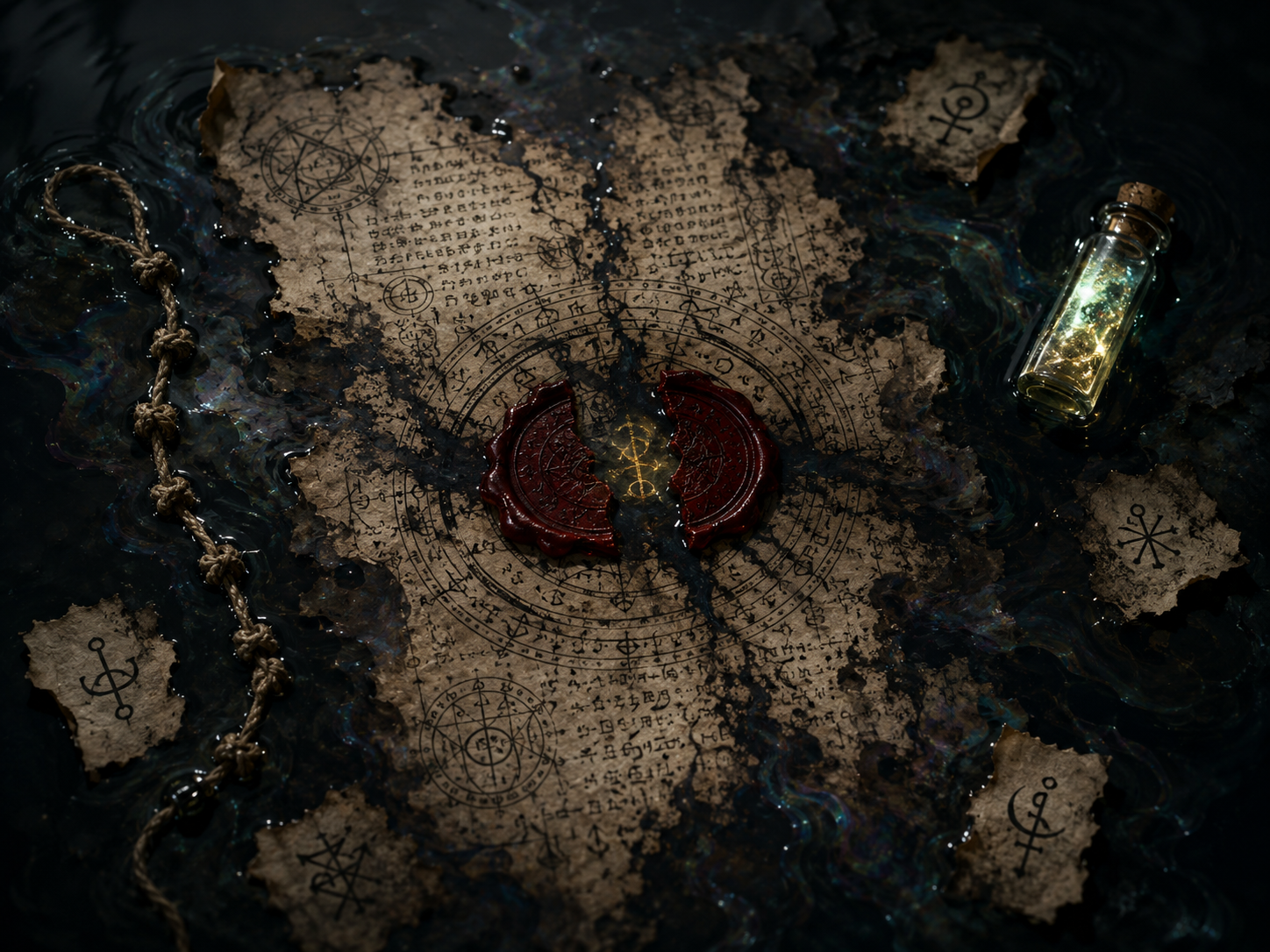
It is not a book. It is a fracture in meaning. A recursive wound where reality stops making sense. Read it in a quiet room. Do not hum along with anything you hear while reading. Do not look up if your reflection moves. The IDMF notes the file reads differently each time.
The IDMF notes: the file reads differently each time.
The Codex remembers which version you received.
Dr. Miriam K. Dey attempted to annotate this file. She is no longer available for comment.
The ShatterRealm does not wait for you to be ready.